By The LTO Show Editorial Staff
The compliance team says the data must be immutable. The storage team reaches for a WORM cartridge. And somewhere between those two decisions, a gap opens that auditors are very good at finding.
WORM Is a Property, Not a Product
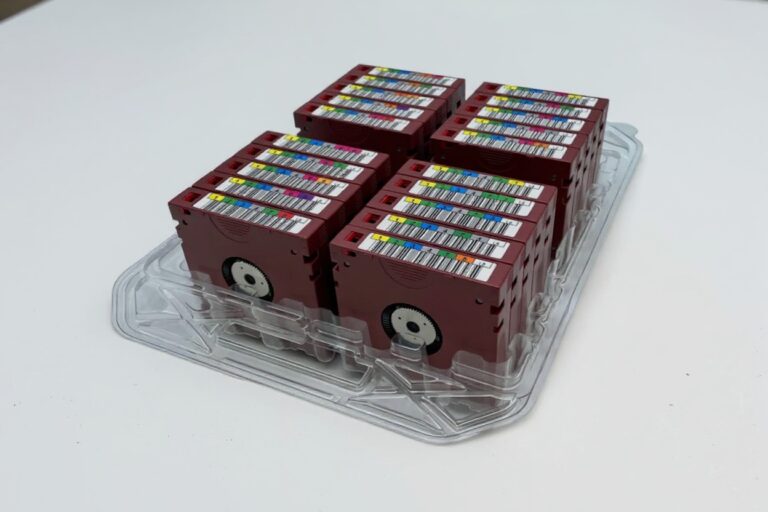
LTO WORM cartridges — available since LTO-3 — enforce write-once at the hardware level. Once a block is committed, the drive firmware rejects any subsequent write command to that logical block address. There is no software override, no admin escape hatch. That physical guarantee is real, and it matters.
But “WORM cartridge” and “compliant retention” are not the same sentence. A cartridge prevents overwrite. A retention policy prevents premature deletion or migration. Regulations like SEC Rule 17a-4 and FINRA 4370 require both: data that cannot be altered and a retention period enforced by the system — not just by policy.
Where the Software Layer Actually Lives
The gap lives in the application stack. Backup platforms — IBM Storage Protect, Commvault, Veeam — each implement retention locking differently. Some bind retention to the WORM cartridge expiry date at write time; others maintain retention metadata independently and simply refuse to issue erase commands before the hold expires. If the application’s retention metadata lives on a database that can be deleted, the physical WORM guarantee alone does not close the compliance loop.
LTFS adds a filesystem view, but LTFS itself does not enforce retention periods. You can mount an LTFS WORM volume, list files, and attempt deletion — the drive will reject the command, but the failure mode depends on whether your workflow layer surfaces that rejection correctly.
Library-Level Considerations at Scale
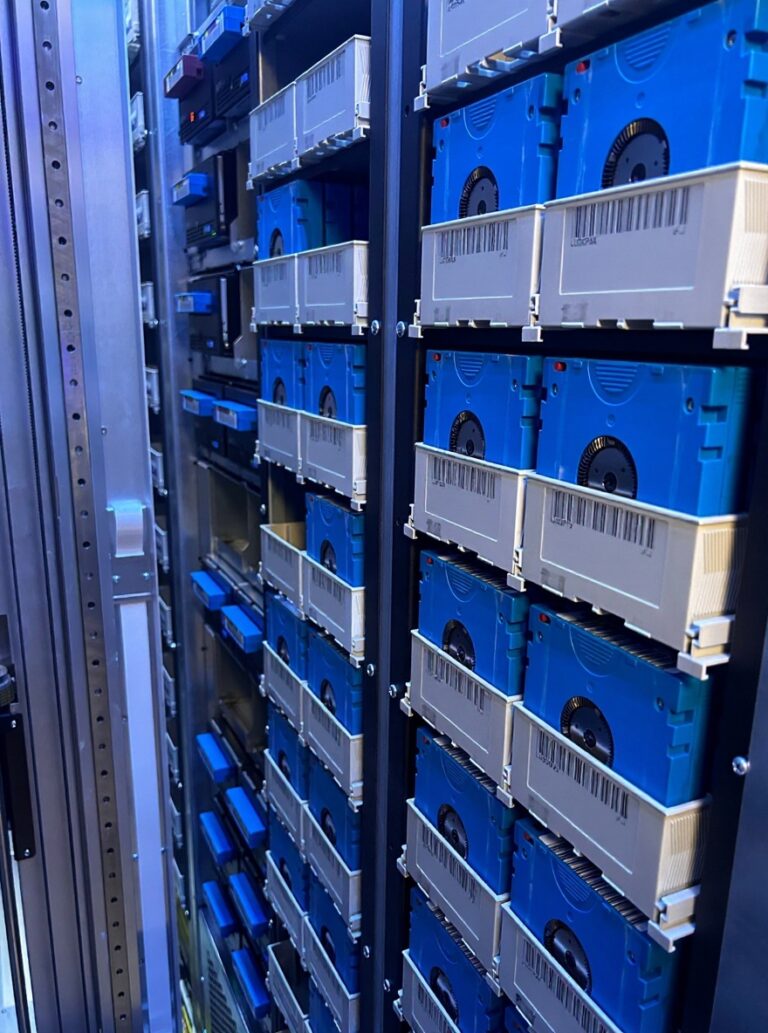
In multi-drive libraries (Spectra Logic TFinity, IBM TS4500, Quantum Scalar i6000), WORM cartridge management becomes a cataloging discipline. Mixed pools of WORM and read/write media require strict slot-partitioning to avoid accidental load-and-write events. Most enterprise library software supports WORM-only pools, but the configuration is operator-set, not automatic.
Firmware matters here too: LTO-9 drive firmware from IBM, HPE, and Quantum each handle WORM MAM (Medium Auxiliary Memory) attributes slightly differently. Field operators mixing vendor drives in third-party libraries should verify WORM MAM interoperability before a compliance audit — not during one.
The Honest Answer
Immutability on LTO tape is genuinely strong — arguably stronger than object-storage software locks, which ultimately depend on a service API that can be misconfigured or revoked. But “tape is WORM” is not a complete compliance answer. Map your retention enforcement to the layer that actually enforces it, test the application’s rejection path, and document both the cartridge generation and the software version in your compliance evidence package.
More on this across Industry Insights. Questions? Reach us at info@ltoshow.com.
Citations
- LTO Consortium — WORM Technology Overview
- SNIA LTFS Standard — Linear Tape File System
- SEC Rule 17 CFR § 240.17a-4 — Electronic Recordkeeping Requirements
Questions or comments? We’d love to hear from you — reach the editorial team at info@ltoshow.com.